Why Are Goalkeepers and Center Backs Recruited Earlier Than Forwards?
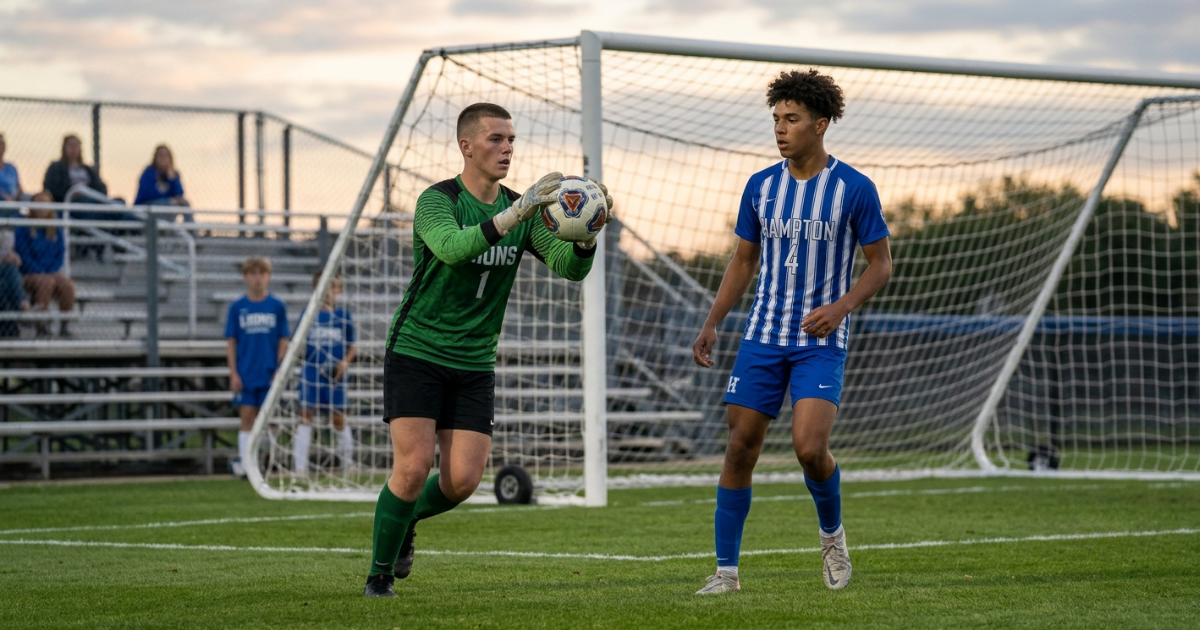
If you’re a high school keeper or center back, college coaches may come calling before your striker teammates hear a peep. It’s not favoritism. It’s math and projection: the traits that make a great keeper or center back show up early and are easier to bet on, while scoring goals is the hardest thing in the sport to predict.
Here’s why the back line gets recruited first, and what it means for your recruiting timeline.
Coaches Recruit for Traits They Can Trust
Great goalkeepers and center backs are built on things that don’t fluctuate much: size, athleticism, reading the game, and composure under pressure. A 6’2″ keeper with quick feet and good positioning at 16 is very likely to still have those tools at 20. Coaches can look at him and feel confident projecting him forward.
Forwards are a different bet. A striker’s value lives in one number: goals. And goal-scoring at the high school or club level doesn’t always translate. A kid who bags 30 goals against weaker competition might not sniff the net against college center backs. Finishing, timing, and separation are skills that take longer to reveal themselves, so coaches wait.
The Back Line Is a Long-Term Investment
Think about how a coach builds a roster. The spine of the team — keeper, center backs, a holding mid — is the foundation. Coaches want to lock that down early because it’s expensive to fix later and because those spots demand stability.
There are also fewer of them. A roster might carry three keepers and four or five center backs, but a whole rotation of attacking players. When a coach finds a keeper he trusts, he moves fast, because he only needs one or two, and he doesn’t want a rival landing the guy first.
Physical Maturity Reads Earlier at the Back
Defending rewards players who are already physically developed. Height, strength in the air, and the ability to win a 1v1 duel are visible on film right now. A dominant center back looks dominant today.
Attacking often rewards the late bloomer. Speed, sharpness, and clinical finishing can arrive at 17, 18, even in college. Coaches know this, so they’re comfortable being patient with forwards and aggressive with defenders.
What This Means for You
If you play in the back, understand that your window can open early — so your film, your metrics, and your outreach need to be ready sooner than your teammates think they do. Don’t wait until senior year.
If you’re a forward, don’t panic when the defenders around you commit first. Your evaluation runs on a longer clock. Keep stacking goals against real competition, get the tape that proves you can separate and finish, and make sure coaches can actually find you.
Either way, the players who get recruited are the ones coaches can see. Ninety helps high school boys build a standout recruiting profile, share game film, and get in front of college coaches at the right time for their position. Start building your profile at go90.io and put yourself on the radar.

About the Author
Beau is the founder of Ninety (go90.io), a college soccer recruiting platform built exclusively for high school boys. A soccer dad who navigated the recruiting process firsthand with his son — an MLS NEXT player — he built Ninety to be the resource he wished he had. Beau also ran SoccerNovo and has a passion for building web apps that solve real problems. He writes about college soccer recruiting to help players and families cut through the noise and recruit with confidence.