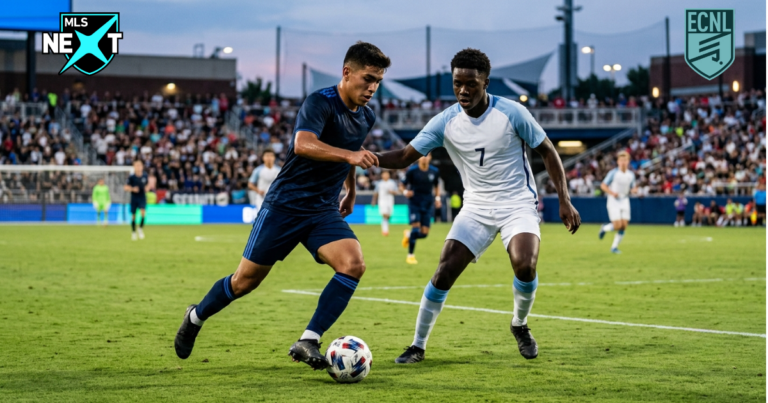
The Difference Between MLS NEXT Homegrown & Academy Division
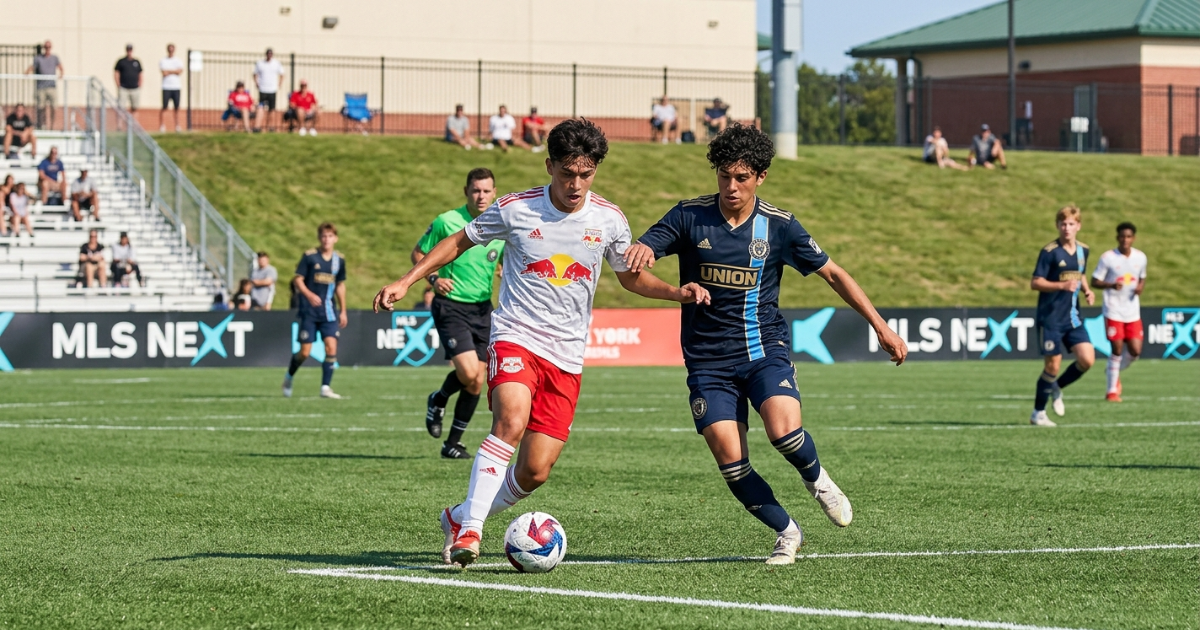
If you’ve spent any time in the youth soccer world, you’ve probably come across MLS NEXT and thought — okay, but what does that actually mean? And if you’ve dug a little deeper, you’ve run into two divisions within MLS NEXT that look almost identical on the surface: Homegrown and Academy. They’re both MLS NEXT. They both play high-level soccer. So what’s the difference?
It’s actually a pretty important distinction for any family trying to understand the youth soccer landscape.
First, a Quick History Lesson
MLS NEXT launched in 2020 as Major League Soccer’s attempt to consolidate and elevate youth soccer in the United States. Before that, the top MLS-affiliated academies played in the US Soccer Development Academy (DA), which shut down in 2020 during COVID and never came back.
What happened next was remarkable. MLS NEXT grew fast. Within a few years it expanded to hundreds of clubs and thousands of players across the country, becoming the largest and most prominent youth soccer platform in the U.S. What started as a league for MLS club academies quickly became something much bigger — a full ecosystem with multiple divisions, age groups, and competitive tiers. The Homegrown and Academy divisions are the direct result of that growth.
MLS NEXT Homegrown Division
This is the OG. This is what MLS NEXT has been for the past six years. The Homegrown Division includes MLS club academies — think Philadelphia Union Academy, FC Dallas Academy, New England Revolution Academy — but it also includes non-MLS affiliated academies that have competed under the MLS NEXT banner since the beginning, like Sockers FC, IMG Academy, and Seacoast United.
The “Homegrown” name comes from the MLS Homegrown Player rule, which allows clubs to sign players from their own academies directly to a professional contract, bypassing the SuperDraft entirely. That pathway applies to the MLS club academies specifically, but the division itself is broader than just pro club programs.
Competing in the Homegrown Division means you’re in a high-commitment environment. Most of these programs don’t allow players to compete for their high school teams during the season, and the training demands reflect that.
MLS NEXT Academy Division
MLS NEXT Academy Division
The Academy Division is brand new — MLS NEXT launched it for the 2025-26 season. The goal was simple: broaden access and deepen the talent pool without sacrificing development standards. It worked. With approximately 230 clubs and 25,000 players, MLS NEXT more than doubled its participating players and clubs overnight.
What makes the Academy Division distinct isn’t just the size — it’s the structure. The regular season is regionally focused and built around high school calendars, which is a meaningful difference from the Homegrown Division. Players here are permitted to play high school soccer, giving families a balance that the Homegrown Division typically doesn’t offer.
The division is managed by several leading operators across the youth soccer landscape — including the National Academy League (NAL) by 3Step Soccer, Elite Academy League (EAL), Sporting Development League (SDL), Cobalt Sports, and Cal North Soccer Association. Each operator follows MLS NEXT’s technical standards and program guidelines, so while the clubs and regions vary widely, the development framework is consistent across the board.
It’s a significant expansion of what MLS NEXT is — and for players who want elite competition without giving up high school soccer, the Academy Division is worth paying attention to.
So Which One Is “Better”?
Wrong question. The better question is what kind of environment fits your player right now.
The Homegrown Division is the established first tier. It’s been the standard for six years, the competition is elite, and the commitment is high. If your son is in a Homegrown program, he’s not playing high school soccer (unless a waiver is in place) — that’s just the reality of most of these programs.
The Academy Division is newer, but don’t mistake new for lesser. It’s built around high school calendars, regionally structured, and gives players access to elite competition without having to choose between club and high school. For a lot of families, that balance matters.
Both divisions are developing serious players. The badge on the jersey matters less than the quality of the environment, the coaching, and whether your son is actually being pushed to get better.
Understanding where you fit in all of this is the first step. Ninety was built to help with exactly that. Check out go90.io.

About the Author
Beau is the founder of Ninety (go90.io), a college soccer recruiting platform built exclusively for high school boys. A soccer dad who navigated the recruiting process firsthand with his son — an MLS NEXT player — he built Ninety to be the resource he wished he had. Beau also ran SoccerNovo and has a passion for building web apps that solve real problems. He writes about college soccer recruiting to help players and families cut through the noise and recruit with confidence.