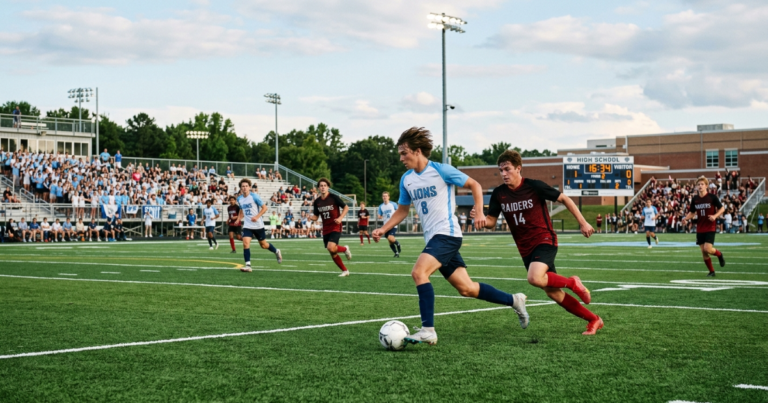
Do I Have to Take the SATs If I’m Getting Recruited for Soccer?
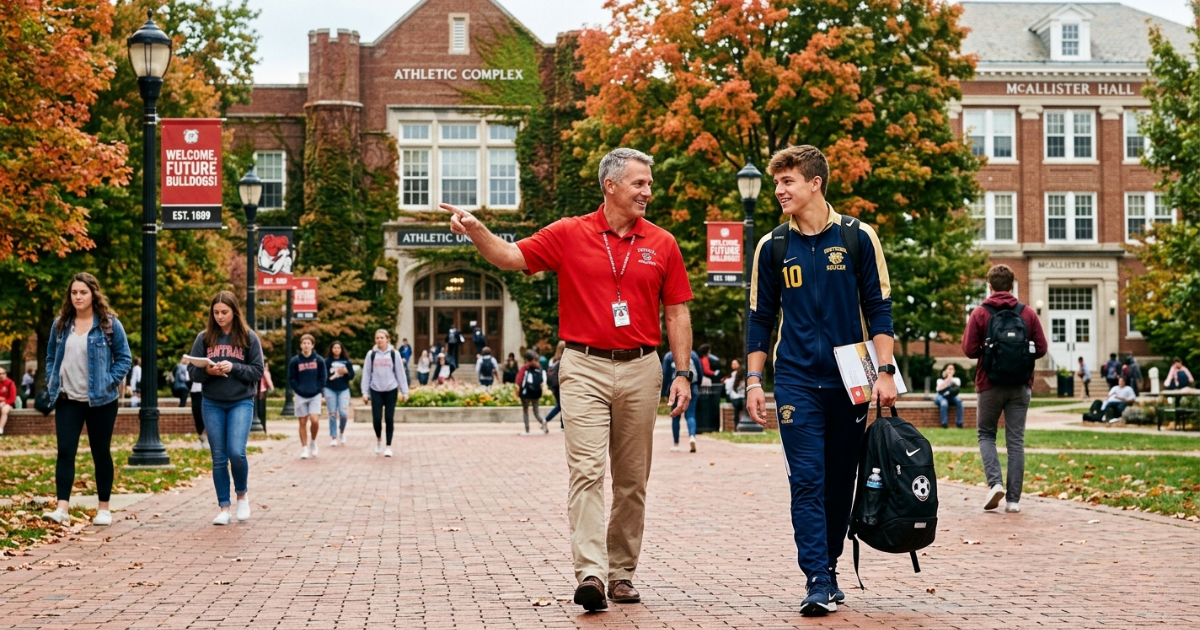
Short answer: probably yes. Many colleges are starting to bring it back.
But let’s break down why, what’s actually required, and what’s changed in the last few years — because this topic has gotten more complicated and more important than ever.
The Test-Optional Era (and Why It’s Mostly Over)
When COVID hit in 2020, colleges scrambled. Testing centers closed, the SAT was canceled, and schools had no choice but to go test-optional. For a few years, it felt like standardized testing might be gone for good. Applications surged, more students got in without scores, and a lot of families thought, “Maybe we can skip this altogether.”
Not so fast.
Starting in 2024, the tide shifted hard. MIT never actually went test-optional. Dartmouth brought back requirements in early 2024, citing research that showed test scores were actually one of the better predictors of student success — especially for first-generation and low-income students. Yale, Harvard, Brown, and Caltech all followed.
By 2025 and into 2026, the majority of selective universities have returned to requiring or strongly preferring standardized test scores. The test-optional window, for most schools, has closed.
So What Does This Mean for Recruited Soccer Players?
Here’s where it gets specific to you as an athlete.
If you’re being recruited at the Division I or Division II level, the NCAA has its own academic eligibility requirements you have to meet through the NCAA Eligibility Center — separate from whatever the admissions office wants. That means even if a coach loves you and a school goes test-optional for regular applicants, the NCAA still has its own standards you need to hit.
For D1, you need to graduate from high school, complete 16 core courses, and meet a sliding scale that factors in your GPA and SAT or ACT score. The lower your GPA, the higher your test score needs to be — and vice versa. For D2, it’s a similar setup with slightly different thresholds.
Here’s an example: if your core course GPA is a 2.8, you’d need at least a 970 on the SAT (Evidence-Based Reading + Math) to be eligible for D1. If your GPA is a 3.2, you’d need an 820. The sliding scale gives you some flexibility, but there’s a floor — a GPA below 2.3 makes you ineligible no matter what you score.
Division III Is Different
D3 schools don’t use the NCAA Eligibility Center the same way, and most don’t have athletic scholarships. But that doesn’t mean test scores don’t matter. You’re still applying to a college as a student, and those schools have their own admissions standards. A D3 coach can recruit you all day, but if you don’t get admitted, it doesn’t matter. At selective D3 programs — think New England Small College Athletic Conference schools like Middlebury, Williams, or Amherst — academic standards are high and test scores carry real weight in admissions.
What About NAIA or Junior College?
NAIA schools have their own eligibility requirements that are generally more flexible than NCAA D1. Junior colleges (NJCAA) have even more open eligibility, but if your goal is to eventually transfer to a four-year program, your transcript and test scores will matter down the road.
The Practical Advice
Take the SAT. Take it more than once if you need to.
The College Board now offers a digital SAT that most students find easier to manage, and prep resources are better than ever. Khan Academy offers free official SAT prep tied directly to the College Board. Spending a few months on prep can move your score significantly and open doors — both academically and athletically.
Register with the NCAA Eligibility Center early (end of your junior year is ideal) and make sure your core courses are on track. A coach can’t officially offer you a scholarship if you’re not going to be eligible.
Test scores aren’t everything, but in 2026, pretending they don’t matter isn’t doing you any favors.
One More Thing
If you’re navigating the recruiting process and trying to figure out where you actually fit athletically — not just academically — that’s where having the right tools makes all the difference. Ninety (go90.io) is built specifically for high school soccer players going through this process. It helps you understand where you stand, which programs make sense for your level, and how to put yourself in front of the right coaches!

About the Author
Beau is the founder of Ninety (go90.io), a college soccer recruiting platform built exclusively for high school boys. A soccer dad who navigated the recruiting process firsthand with his son — an MLS NEXT player — he built Ninety to be the resource he wished he had. Beau also ran SoccerNovo and has a passion for building web apps that solve real problems. He writes about college soccer recruiting to help players and families cut through the noise and recruit with confidence.