The Case for NESCAC Schools: Why Top High School Soccer Players Should Pay Attention
If you’re a high school soccer player chasing both elite academics and competitive college soccer, NESCAC schools deserve a spot at the top of your list.
The New England Small College Athletic Conference offers a combination of Division III soccer, Ivy-caliber education, and tight-knit campus communities that’s genuinely hard to beat — and way too many talented players sleep on it.
Here’s the pitch: you can play meaningful, high-level soccer, graduate from one of the most respected academic institutions in the country, and not burn out doing it. Sound worth exploring? Let’s break it down.
What Is the NESCAC?
The NESCAC is a Division III athletic conference made up of 11 small liberal arts colleges across the Northeast. These schools don’t offer athletic scholarships (DIII rules), but they offer something arguably more valuable: need-based and merit aid at schools with massive endowments, plus a true student-athlete experience where soccer doesn’t swallow your entire college life.
The soccer is legit. NESCAC programs consistently compete deep into the NCAA DIII tournament, and Amherst, Tufts, Williams, and Middlebury have all won national championships or made Final Four runs in recent years.
The 11 NESCAC Schools and Where They’re Located
Here’s the full list of NESCAC schools with men’s soccer programs:
- Amherst College — Amherst, Massachusetts
- Bates College — Lewiston, Maine
- Bowdoin College — Brunswick, Maine
- Colby College — Waterville, Maine
- Connecticut College — New London, Connecticut
- Hamilton College — Clinton, New York
- Middlebury College — Middlebury, Vermont
- Trinity College — Hartford, Connecticut
- Tufts University — Medford, Massachusetts
- Wesleyan University — Middletown, Connecticut
- Williams College — Williamstown, Massachusetts
Most of these schools are small (1,800–3,000 undergrads), rural or small-town, and share a New England liberal arts DNA. Tufts is the outlier — it’s a research university just outside Boston and the biggest of the bunch.
Why NESCAC Soccer Is Better Than You Think
Don’t let “Division III” fool you. The level of play is high, and the conference is one of the most competitive in the country at any level of DIII.
A few things set it apart:
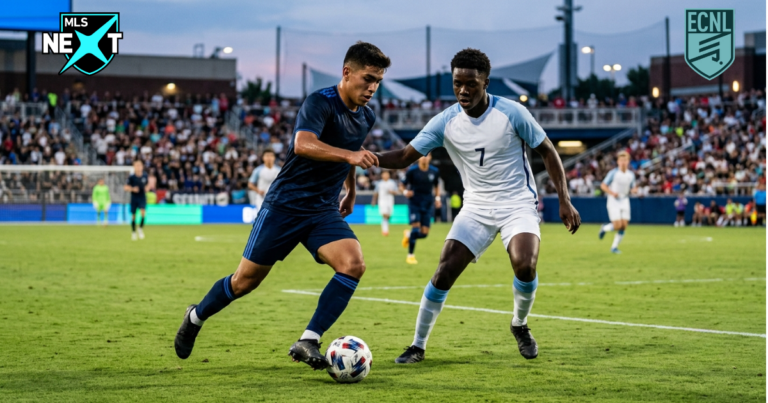
The rosters are stacked with former ECNL, MLS Next, and academy-level players who prioritized academics. You’ll be training with guys who could’ve played DI but chose the NESCAC for the degree. Programs are well-funded, the facilities are often excellent, and coaches are committed career professionals — not part-timers.
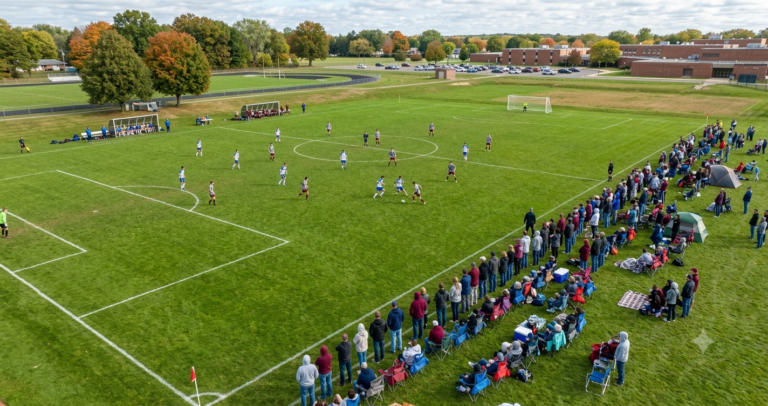
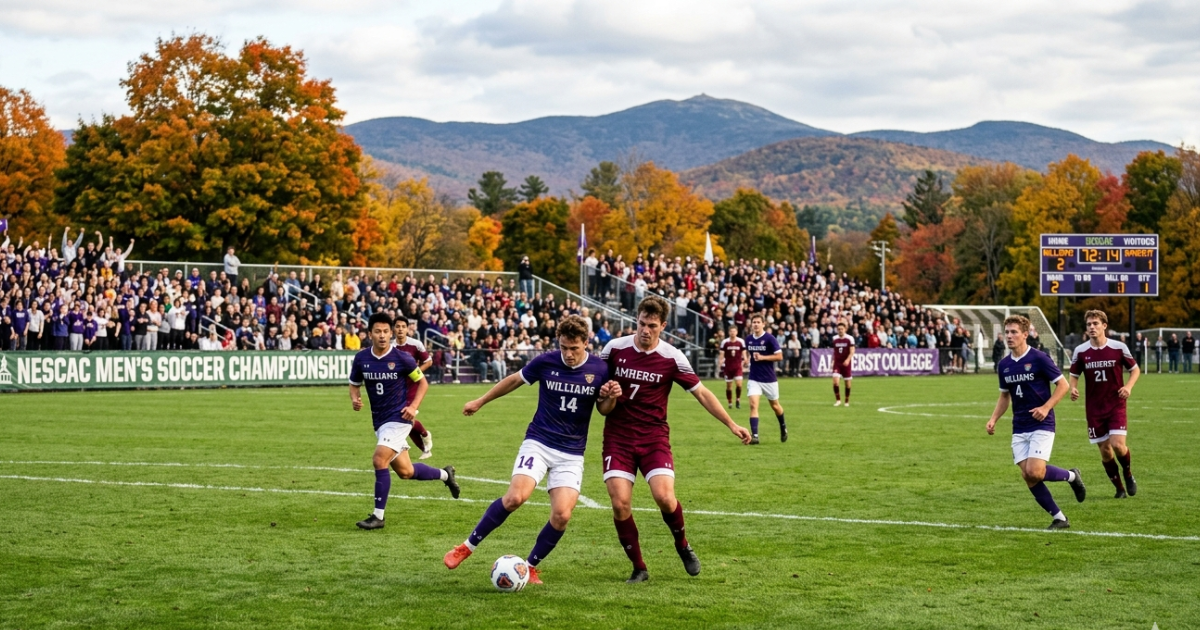
Games draw real crowds, especially rivalry matchups like Amherst-Williams (the “Biggest Little Game in America”) or the Maine rivalries between Bates, Bowdoin, and Colby.
Academics That Open Doors for Life
This is where NESCAC schools separate themselves. Williams, Amherst, and Bowdoin are ranked among the top liberal arts colleges in the country every year. A degree from any NESCAC school carries real weight in finance, consulting, law school, med school, and grad programs.
The alumni networks are tight and active. Players from these schools land jobs at places like Goldman Sachs, McKinsey, top law firms, and competitive PhD programs — and they still got to play college soccer for four years.
The Financial Piece People Miss
Yes, DIII means no athletic scholarships. But NESCAC schools have enormous endowments, which means generous need-based financial aid. Many families end up paying less at a NESCAC school than they would at a state school with a partial athletic scholarship. Run the net price calculator on any NESCAC website before assuming it’s out of reach — the numbers often surprise people.
Why You Should Reach Out Now
NESCAC coaches recruit early and rely heavily on player-initiated contact. Unlike DI programs with full-time recruiting staffs chasing down prospects, NESCAC coaches want to see that you’re genuinely interested in their school, not just their soccer program. That means:
A thoughtful email, highlight video, transcript, and test scores go a long way. Coaches at these schools have real pull with admissions, but they use that pull on players who show the academic profile and the interest. If you’ve got the grades and the game, reaching out proactively can completely change your trajectory.
Ideally, you’re starting this conversation by the end of junior year — earlier if possible. Roster spots fill up, and coaches lock in their classes well before senior year.
Is the NESCAC Right for You?
Ask yourself: Do you want a school where soccer is a huge part of your life but not your entire identity? Do you want to graduate with a degree that travels anywhere? Do you want to be surrounded by teammates who are just as driven in the classroom as they are on the field?
If yes, the NESCAC is built for you.
Ready to start building your list and reaching out to NESCAC coaches the right way? Ninety (go90.io) helps high school soccer players organize their recruiting process, build standout profiles, and connect with college coaches who are actually looking for players like you. Start your free profile today and take the first step toward your NESCAC future.
Frequently Asked Questions
In some cases, yes. Williams, Amherst, and Bowdoin have admit rates rivaling or beating Ivy League schools. Coach support helps, but you still need the grades and scores to clear admissions.
Yes — they have real pull with admissions, but they use it on players who bring the academic profile to match. Strong grades, solid test scores, and genuine interest in the school are non-negotiable.
Sophomore or early junior year. NESCAC coaches recruit on their own, without big staffs, so player-initiated contact matters a lot. Classes often fill up before senior year — waiting is the biggest mistake.

About the Author
Beau is the founder of Ninety (go90.io), a college soccer recruiting platform built exclusively for high school boys. A soccer dad who navigated the recruiting process firsthand with his son — an MLS NEXT player — he built Ninety to be the resource he wished he had. Beau also ran SoccerNovo and has a passion for building web apps that solve real problems. He writes about college soccer recruiting to help players and families cut through the noise and recruit with confidence.