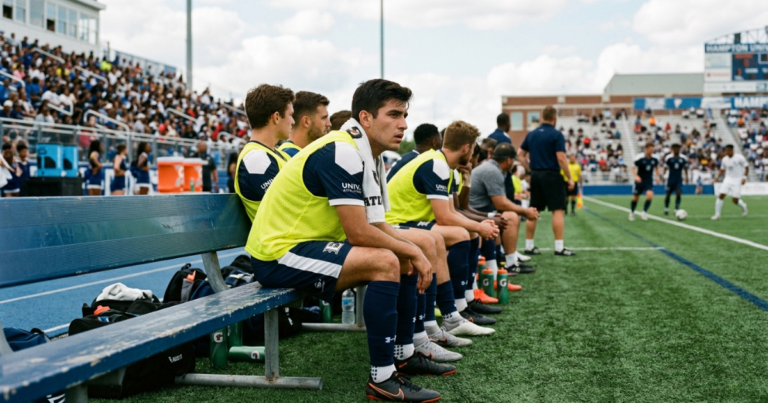
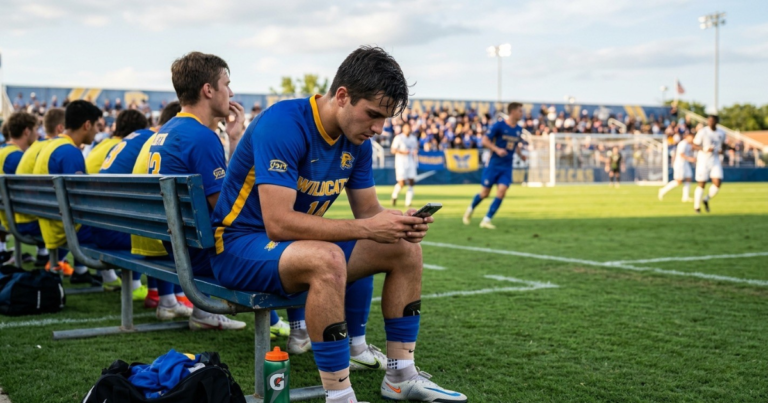
College Soccer Is Going Year-Round Starting in 2027 — Here’s What It Means for You
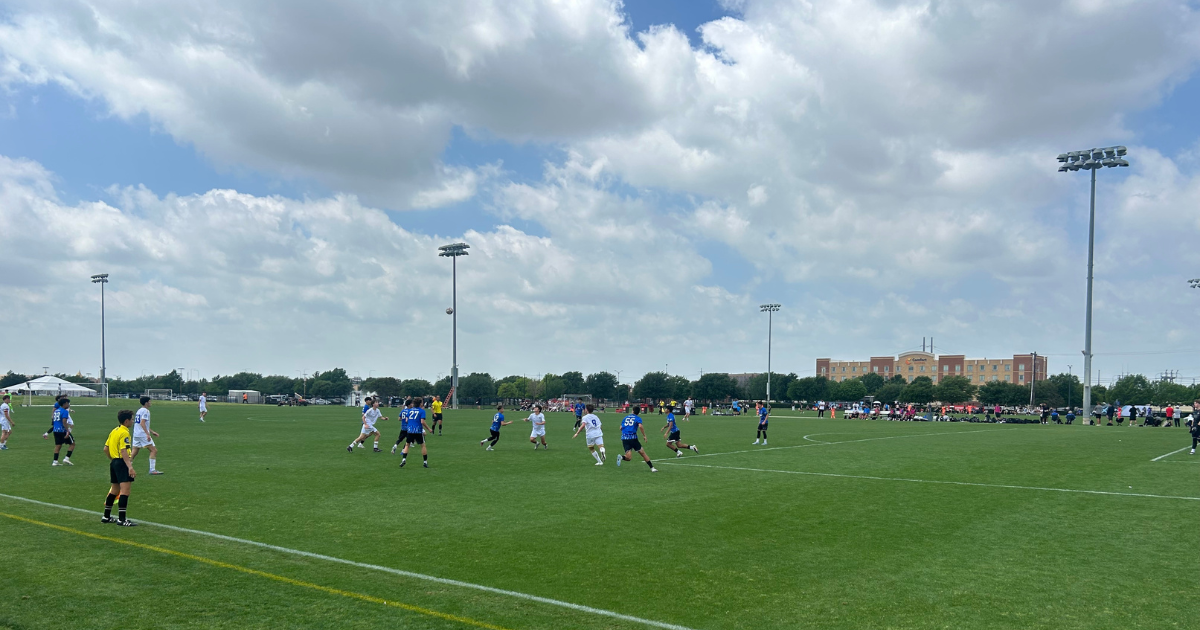
D1 men’s college soccer is about to look completely different. The NCAA Division I men’s soccer season will be split between the fall and spring, with the national tournament moving to the spring starting in 2027-28. That means the College Cup you’ve watched every December? Moving to the spring.
The cram-everything-into-13-weeks fall grind? Gone. If you’re a high school player in the classes of 2027, 2028, or beyond, this changes the game you’re being recruited into.
What’s Actually Changing
The Men’s Soccer Oversight Committee adopted legislation changing the sport’s season to two semesters, effective Aug. 1, 2027. The proposal is subject to review by the Division I Cabinet during its June 23-24 meeting.
Here’s the new structure:
- Teams will be allowed to play 18 matches from late August until the Saturday before Thanksgiving and up to 10 matches from mid-February until the start of the NCAA Tournament.
- The maximum number of contests remains at 25 — same total games, just spread across two semesters
- The College Cup moves to the spring (exact dates TBD)
- The transfer window becomes one 15-consecutive day period in the spring, after the College Cup — down from the current 45 days split across two windows
Important note: There is no movement afoot to restructure the women’s season. This is a men’s-only change.
Will All Teams Adopt the Change?
Short answer: every D1 men’s program is in. The legislation applies league-wide once it’s approved by the Division I Cabinet in June, so all 200+ D1 schools will play under the new fall-spring model starting in 2027-28. There’s no opt-out.
But there’s flexibility built in. If adopted, this proposal does not change when conference championships occur. Instead, it would allow conferences the autonomy to determine the timing of its conference championship (i.e., during the fall or spring segment) while also providing flexibility for institutions to schedule competitions across both segments.
That means conferences like the ACC, Big Ten, Sun Belt, and Ivy League can each decide whether their conference tournament happens in November or April — and how to spread their schedule. Expect northern schools to load up on home games in the fall and head south in February-March to dodge the weather.
What about D2, D3, and NAIA? This legislation is D1-only. Those divisions are still on their current fall-only schedule and haven’t announced any changes. So if you’re being recruited by a D3 program in the NESCAC or a D2 school, the season you’re stepping into still looks the same. The schedule split only impacts D1 recruits.
Why the NCAA Made the Switch
The current model crams a full season into 10-13 weeks. That’s two or three games a week, brutal travel, banged-up bodies, and barely any time to actually develop as a player. The oversight committee introduced the new model in January with the rationale focusing on student-athlete welfare.
The new calendar promises real recovery time between matches, more predictable weekly schedules, and a structure that lines up better with how the rest of the soccer world operates. Major League Soccer, the United States’ top soccer division currently, is moving from a spring-to-fall model to a summer-to-spring model also in 2027 — so college and pro will finally be on the same page.
What This Means for the Upcoming Season
If you’re getting recruited right now, the 2026 fall season is still the old format. Same with 2026-27. The new changes would be put in place for the 2027-28 season.
So the class of 2026 freshmen will play one traditional fall season before everything flips. The class of 2027 will walk into the new system as freshmen. Classes of 2028 and beyond? This is the only college soccer you’ll know.
What It Actually Means for High School Players
A few things to think about as this lands:
- Your fitness needs to be year-round. A 10-game spring slate after a full fall isn’t a light afterthought — it’s a championship push. Programs are going to recruit players who can hold their level for nine straight months, not just survive a 13-week sprint.
- Development time goes up. The biggest knock on college soccer has always been that there’s no time to coach. Now there is. Coaches can actually train you in the spring instead of just playing tournament games against random opponents. That favors players who are coachable and want to keep getting better.
- The transfer game gets tighter. One 15-day window in the spring means less chaos. If you’re picking a school, the staff and roster you commit to is more likely to be the one you actually play with. Fit matters even more now.
- The MLS pathway gets cleaner. With college and MLS aligned on the calendar starting in 2027, jumping from college soccer into the pro game is going to feel less like changing sports. That’s a real opportunity for players who want to go pro.
The Takeaway
This is the biggest structural change to D1 men’s soccer in decades. It’s better for players, better for development, and better aligned with the pro game. If you’re a high school player, the recruiting process you’re going through is preparing you for a college experience that’s about to look a lot more like a real soccer season — and a lot less like an academic-calendar afterthought.
The programs recruiting you are already adjusting how they identify and develop talent. Make sure you’re ready for what they’re looking for!
Frequently Asked Questions
The 2027-28 season. The legislation takes effect August 1, 2027, pending final approval from the Division I Cabinet in June 2026. The 2026 fall season and 2026-27 are still the old format. So if you’re class of 2026, you’ll get one traditional fall as a freshman before the switch. Class of 2027 walks straight into the new system.
No. This is D1 men’s only. D2, D3, and NAIA programs are staying on the current fall-only schedule with no announced changes — so if you’re being recruited by a NESCAC school or a D2 program, your season looks the same. Women’s college soccer is also unaffected; there’s no movement to restructure that calendar.
It shrinks to one 15-consecutive-day window in the spring, right after the College Cup. That’s down from the current 45 days split across two windows. Bottom line for recruits: less roster chaos, more stability. The staff and roster you commit to is more likely to be the one you actually play with — which makes fit and program research way more important on the front end.

About the Author
Beau is the founder of Ninety (go90.io), a college soccer recruiting platform built exclusively for high school boys. A soccer dad who navigated the recruiting process firsthand with his son — an MLS NEXT player — he built Ninety to be the resource he wished he had. Beau also ran SoccerNovo and has a passion for building web apps that solve real problems. He writes about college soccer recruiting to help players and families cut through the noise and recruit with confidence.