Why College Soccer Isn’t for Everybody

Let’s have the conversation most coaches, club directors, and well-meaning parents refuse to have.
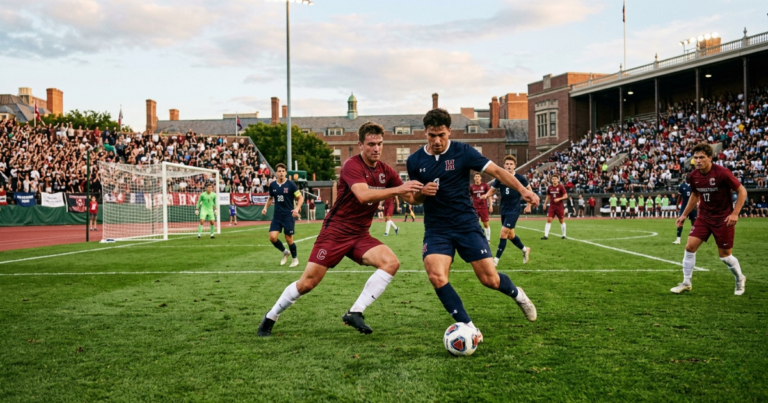
College soccer sounds like the dream. You play the sport you love, you get an education, maybe you score some scholarship money, and you tell people at Thanksgiving that you play college ball. It’s a great story. But for a lot of kids chasing that story, reality eventually shows up — and it’s not gentle about it.
Here’s the truth: college soccer isn’t for everybody. And recognizing that sooner rather than later isn’t giving up. It’s actually one of the smartest moves you can make.
The Numbers Don’t Lie
There are roughly 450,000 high school boys playing soccer in the United States. The number who go on to play any form of college soccer — D1, D2, D3, NAIA, junior college — is somewhere around 7%. That’s it.
And of that 7%, a fraction are playing at the level they imagined when they were 14, dreaming about it. A lot of guys end up at a D3 school three states away where they’re getting no scholarship money, practicing four days a week, and sitting the bench more than they expected.
That’s not a failure. But it’s also not what some families picture when they say “I want my son to play college soccer.”
Here’s what that statistic doesn’t tell you though: plenty of the guys who didn’t make it to college soccer went on to build incredible lives. Some of the most driven, successful people you’ll ever meet are former high school athletes who channeled that same competitiveness into a career, a business, a family. The discipline soccer gave you doesn’t disappear when the recruiting process ends. It goes with you.
The Talent Gap Is Real — and It’s Okay
Here’s where we have to be brutally honest. Some players just aren’t at the level required — not because they didn’t work hard, not because they don’t love the game, but because the talent pool at the college level is genuinely elite.
College coaches, even at smaller programs, are pulling from a national and increasingly international recruiting pool. They’re looking at players who’ve been training with professional academies, who’ve played regional and national leagues, who’ve been identified since they were 13 or 14. If that hasn’t been your path, competing for a roster spot becomes an uphill battle.
This isn’t about crushing anyone’s confidence. It’s about being honest so kids can make good decisions. And a good decision made at 16 or 17 can set the trajectory for everything that comes after. That’s not a small thing. That’s everything.
Scholarship Money Isn’t What You Think
A lot of families go into the recruiting process thinking scholarship = free ride. The reality is messier. Soccer is an equivalency sport, meaning coaches split a limited number of scholarships across a full roster. The scholarship landscape just changed significantly.
As of the 2025-26 school year, D1 men’s soccer programs can now offer up to 28 scholarships — up from the old limit of 9.9. On paper, that sounds like a massive win for recruits. But here’s the catch: schools aren’t required to use all 28, and how much money actually flows into soccer programs depends entirely on each school’s budget and priorities. A mid-major school isn’t suddenly handing out 28 full rides. Do your homework on specific programs before assuming the new rules change your situation.
When you do the math — travel, housing, fees — some of these “scholarships” don’t move the needle as much as you’d hope. And at D3, there are no athletic scholarships at all, though there can be academic and need-based aid.
So if your family is counting on soccer to solve the college cost problem, do your homework on specific programs before assuming the new rules change your situation. The opportunity is more real than it used to be — but it still isn’t guaranteed.
Playing Time Is Not Guaranteed
This one stings the most. You were the guy on your club team. You started every game. Coaches loved you.
Then you get to college and you’re surrounded by 24 other guys who were all that guy on their club team. The adjustment is real, and for some players, it never fully happens. Sitting the bench in college while paying college tuition — or watching your parents pay it — is a frustrating place to be.
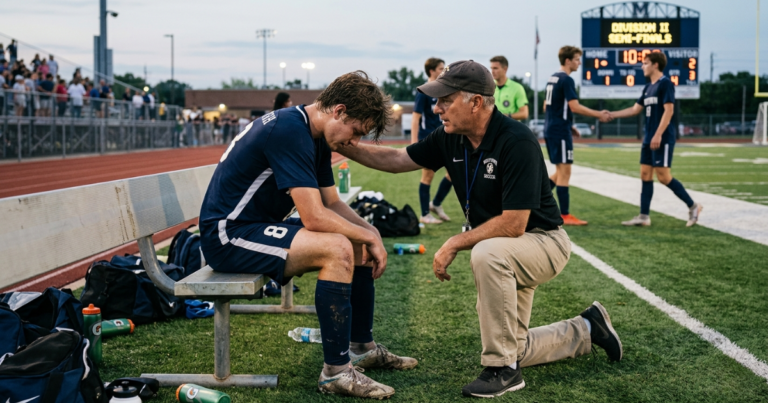
Some players thrive with that challenge. Others quietly lose their love for the game somewhere in year two. Neither response makes you weak. It makes you human.
College Soccer Is a Huge Time Commitment
People underestimate this. Between training, film sessions, travel, games, and recovery, college soccer is essentially a part-time job on top of a full course load. At the D1 level especially, it can feel more like a full-time job.
For some players, that structure is exactly what they need. For others — especially those who want to pursue demanding majors, internships, entrepreneurship, study abroad — it can feel like soccer is the thing standing between them and the college experience they actually want.
There’s no shame in choosing the full college experience over the sport. Knowing what you want and going after it unapologetically — that’s its own kind of winning.
So What’s the Alternative?
A lot. Club soccer, intramural leagues, recreational leagues — guys play well into their 30s and love every minute of it. Some players find that not playing college soccer actually reignites their passion for the game because they’re playing for fun again.
Others redirect that energy into their careers early, building something, getting ahead — and they’re grateful they had the clarity to do it.
The goal was never soccer. The goal was a good life. Soccer was one potential path to it.
If You ARE Going to Pursue It, Be Smart About It
If after all of this you’re still in — good. The kids who make it are usually the ones who go in clear-eyed, realistic about their level, proactive about the process, and committed to finding the right fit rather than just the biggest name.
The recruiting process rewards players who are organized, honest about what they bring, and strategic about which programs are actually a match.
That’s exactly what Ninety was built for. Go90.io helps high school players cut through the noise, understand where they realistically fit in the college soccer landscape, and build a recruiting strategy that actually makes sense for them. No fluff, no false hope — just a smarter way to navigate the process.
If college soccer is right for you, let’s make sure you find the right fit. Start at go90.io.

About the Author
Beau is the founder of Ninety (go90.io), a college soccer recruiting platform built exclusively for high school boys. A soccer dad who navigated the recruiting process firsthand with his son — an MLS NEXT player — he built Ninety to be the resource he wished he had. Beau also ran SoccerNovo and has a passion for building web apps that solve real problems. He writes about college soccer recruiting to help players and families cut through the noise and recruit with confidence.