How to Play Men’s Soccer at an Ivy League School
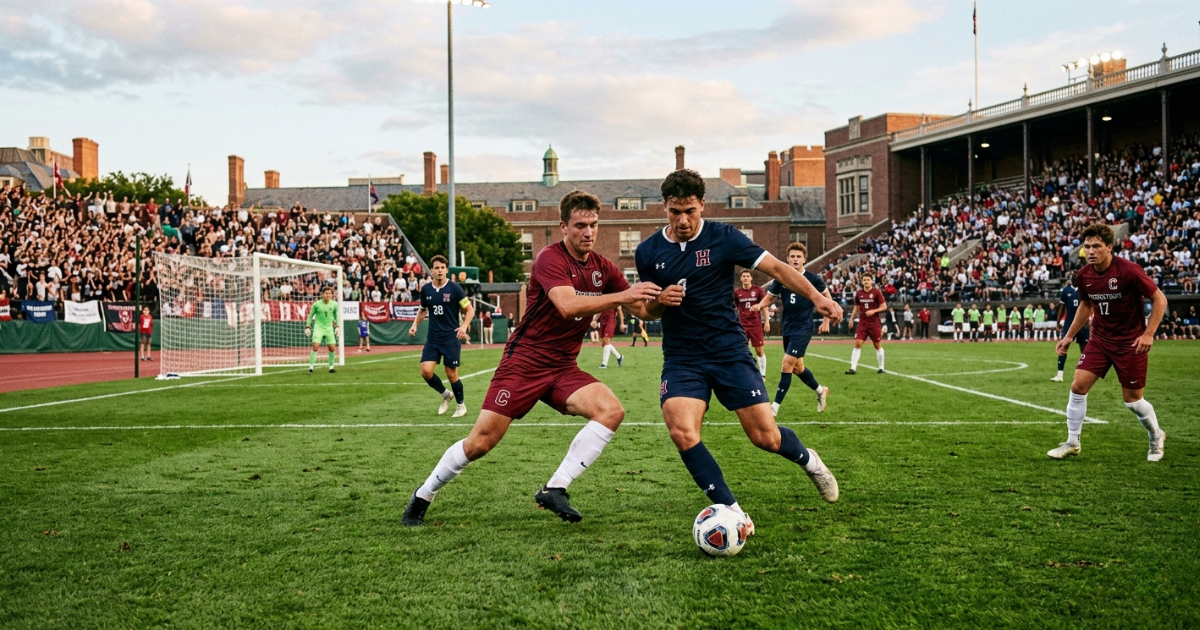
Getting recruited to play men’s soccer at an Ivy League school comes down to one brutal truth: you need to be a Division I-caliber player AND clear an academic bar most students never see — the Academic Index.
Master both, start early, and target the right coaches, and you can pull off one of the hardest combinations in college sports.
The Ivy League fields eight men’s soccer programs:
- Brown
- Columbia
- Cornell
- Dartmouth
- Harvard
- Penn
- Princeton
- Yale
They’re all NCAA Division I, they don’t offer athletic scholarships (only need-based financial aid), and they win. Princeton took the 2025 Ivy tournament title, Penn won the regular season the prior year, and Cornell made the second round of the 2024 NCAA Tournament. Translation: the soccer is real.
Here’s exactly how to get there.
Understand the Academic Index (This Is the Gatekeeper)
The Academic Index (AI) is a number from 60 to 240 that combines your GPA and SAT/ACT scores. Every Ivy soccer coach has a minimum AI they must hit for each recruit. If you fall below it, the coach literally cannot help you in admissions — no matter how good you are on the ball.
The unofficial floor is around 176 (roughly a 3.4 unweighted GPA + ~1100 SAT), but realistically you want to be at or above the average AI of admitted non-athletes at your target school. Coaches are placed in “bands” — they only get one or two low-AI recruits per class, but more slots open up as your AI rises. The higher your AI, the more leverage your coach has to fight for you in admissions.
Action step: Calculate your AI by sophomore year. If it’s below 200, get a tutor, retake the SAT/ACT, and treat your GPA like another training session.
Play Where Ivy Coaches Actually Watch
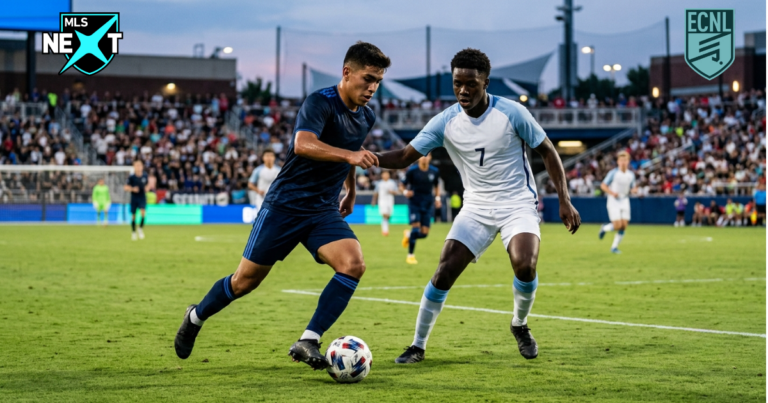
Ivy coaches recruit from elite club environments — MLS NEXT, ECNL, USL Academy, and top regional showcases. If you’re not playing at one of these levels, your highlight tape won’t get a second look.
The other non-negotiable: showcases. Generation adidas Cup, MLS NEXT Fest, MLS NEXT Flex, ECNL Showcases, Jefferson Cup, and the Ivy League ID Camps run on each campus during the summer are where Ivy coaches do their evaluating.
Going to an Ivy ID camp doesn’t get you recruited, but it puts you in front of the coach in a low-pressure setting where they can see you train.
Example: A center back playing MLS NEXT in the Northeast who attends three Ivy ID camps and emails coaches before each one will get more eyes than a player at the same level who does neither.
Know the Recruiting Timeline
For Division I men’s soccer, coaches cannot directly contact you until June 15 after your sophomore year. But that doesn’t mean you wait. You can email coaches anytime, and they’re absolutely watching sophomores — they just can’t write back yet.
Here’s the realistic timeline:
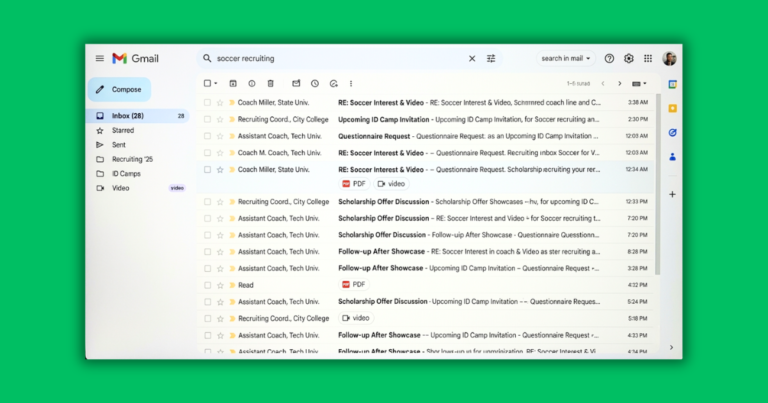
- Freshman/Sophomore year: Build your AI, play up if possible, send intro emails with your highlight reel, fill out recruiting questionnaires on every Ivy soccer website.
- June 15 after sophomore year: Coaches can finally reply. Expect a low level of communication if they’re interested. Schedule unofficial visits.
- Junior year (August 1+): Official visits open. This is when verbal commits start happening. Most Ivy soccer classes are largely set by the end of junior year or early senior fall.
- Senior year (November 1): Apply Early Decision/Early Action to the school where the coach is supporting you. A “likely letter” from admissions in early fall is the closest thing to a guarantee you’ll get.
Email Coaches the Right Way
Generic mass emails get ignored. Ivy coaches read everything, and they can tell instantly if you copy-pasted. Your email should include:
Position, graduation year, club team and league, height/weight, GPA (unweighted), SAT/ACT score, and a short highlight video link (under 5 minutes) with full game footage available on request. Mention your upcoming schedule so they can scout you. Reference something specific about their program — a recent result, their style of play, a player you respect. That’s it. Three short paragraphs, max.
Build a Smart Target List
Don’t apply to all eight Ivies and hope. Each program has a different coaching style, depth chart, and academic appetite. Cornell and Princeton lean heavily on technical, possession-based play. Penn has been the regular-season favorite recently. Harvard and Yale are rebuilding momentum. Match your profile and position to teams that actually need you. A coach with three returning senior center backs isn’t recruiting another one, no matter how good you are.
Check each program’s roster, recent recruiting class, and graduating seniors before reaching out.
Don’t Forget Plan B
Even with everything aligned, Ivy admissions is a coin flip with a tilted coin. Build a target list of NESCAC schools (Williams, Amherst, Middlebury, Tufts), Patriot League programs (Bucknell, Lehigh, Colgate), and high-academic D1s like Stanford, Duke, Northwestern, and Wake Forest. Many high-academic D3 programs play a higher level of soccer than people give them credit for, and the coach support in admissions is often just as strong.
The Bottom Line
Playing men’s soccer at an Ivy League school is a four-year project, not a senior-year scramble. The kids who get there start the AI grind freshman year, play in the right environment, email coaches with intent, and build relationships over months — not days.
Ready to organize your recruiting? Ninety helps high school boys map their target schools, track coach outreach, and stay on top of every step of the recruiting timeline — so nothing slips through the cracks. Build your recruiting plan today at go90.io.
Frequently Asked Questions
No. Ivy League schools don’t offer athletic scholarships in any sport — that’s a league-wide policy. What they do offer is need-based financial aid, and it’s generous. Many families end up paying less to attend an Ivy than they would at a state school once aid kicks in. So if you hear an Ivy coach say “I want you,” they’re not handing you a soccer scholarship — they’re offering admissions support plus access to one of the strongest financial aid packages in college sports.
A likely letter is a written notification from an Ivy League admissions office, sent in early fall of senior year, telling you that you’re highly likely to be admitted. It’s the closest thing to a verbal commitment you’ll get from an Ivy — no formal National Letter of Intent exists in the league. You get one by being a recruit a coach actively wants. The coach submits your file to admissions, admissions reviews your Academic Index and full application, and if you clear, the letter comes. Without coach support, you’re applying like every other student.
Technically yes, realistically rare. Most Ivy rosters are filled with recruited players because the coach has already used admissions support to get them in. Walk-on spots exist but are limited and competitive — you’d usually need to email the coach in the spring of your senior year (after you’ve been admitted on academics alone), get invited to preseason tryouts, and earn a spot from there. It happens, but plan to be recruited if you want a real shot at playing.

About the Author
Beau is the founder of Ninety (go90.io), a college soccer recruiting platform built exclusively for high school boys. A soccer dad who navigated the recruiting process firsthand with his son — an MLS NEXT player — he built Ninety to be the resource he wished he had. Beau also ran SoccerNovo and has a passion for building web apps that solve real problems. He writes about college soccer recruiting to help players and families cut through the noise and recruit with confidence.