Can I still play D1 soccer if I didn’t make my ECNL club’s top team?
Yes, you can absolutely still play D1 soccer even if you didn’t make your ECNL club’s top team! College coaches recruit players, not roster labels.
Plenty of guys currently starting in D1 programs spent a season (or three) on their club’s second team, an MLS NEXT “B” side, or an NPL squad before catching a coach’s eye. Where you sit on your club’s depth chart in your sophomore year is not a verdict on your college ceiling. It’s a snapshot, and snapshots change fast in boys soccer.
Let’s break down why the “top team” pressure is mostly noise, and what actually moves the needle for D1 recruiting.
The Depth Chart Is Not the Draft Board
Making or missing your club’s top team comes down to a coach’s read on a specific group, on a specific day, for a specific season.
Late bloomers get buried. A kid who grows four inches the following summer suddenly plays a completely different game.
Positional logjams are real too, if your club stacked three center backs in your birth year, one of them is riding the second team no matter how good he is.
College coaches know all of this. They’ve been doing this long enough to have recruited plenty of players off second teams who turned into all-conference starters. What they’re evaluating is you on the field the day they watch, not the badge on your training top. A composed left-footed center back playing for the “2s” is more interesting to a D1 staff than an average athlete cruising on the top team.
What D1 Coaches Are Actually Looking For
Coaches recruit traits, not team names. For boys specifically, they’re watching for a handful of things that show up regardless of which team you’re on:
Athleticism and physical projection, meaning your speed, your frame, and how you’ll fill out over the next two years. Technical ability under pressure, so how clean you are in tight spaces when a defender is on your back. Soccer IQ, which is your decision-making, your positioning, and whether you make the players around you better. And a position of need, because sometimes it’s simply that a program is losing two graduating outside backs and you happen to play there.
Notice that “made the top team” isn’t on that list. A tall, quick, ball-playing center mid on a second team checks more boxes than a small, safe holding mid on the first team. The film doesn’t care about the roster.
Real Talk: The Level You Play Still Matters (A Little)
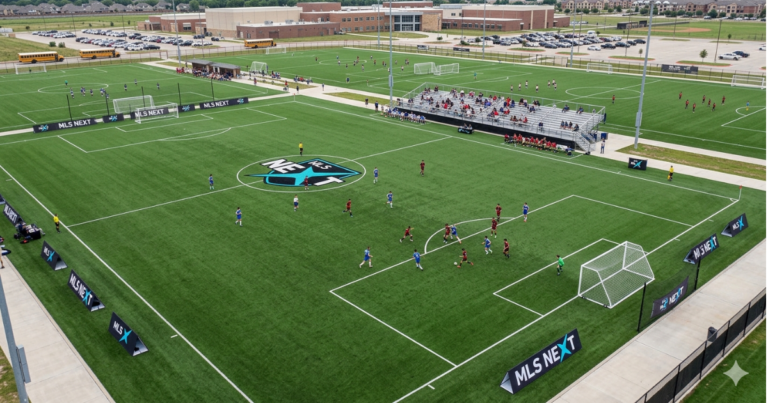
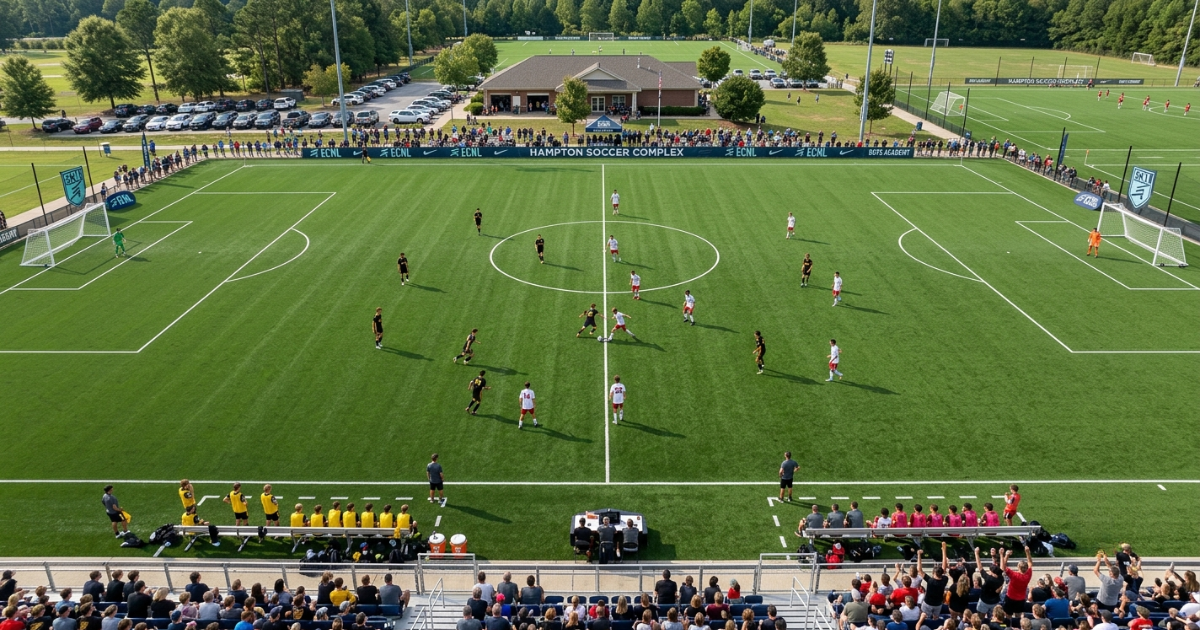
Here’s the honest part. The top team usually gets the better showcase schedule, the tougher games, and more eyes from coaches at ECNL National Events or MLS NEXT Flex/Cup. That’s a genuine advantage, not because the players are automatically better, but because of exposure. So being on the second team isn’t nothing, it can mean fewer natural looks.
But “fewer natural looks” is a problem you solve with effort, not a wall. The players who get recruited off second teams are almost always the ones who took recruiting into their own hands instead of waiting for a coach to wander over to field seven. Which brings us to the part you actually control.
What You Can Control Starting Today
You can’t control where your club coach slots you. You can control almost everything else that matters for recruiting.
Build a highlight and full-game film library. A short highlight reel gets a coach interested, and full-game footage keeps them interested. This is the single biggest equalizer for second-team players, because good film travels to any coach, anywhere, without a showcase invite.
Email coaches directly and early. College coaches genuinely read recruiting emails from players (not just parents). A concise note with your position, grad year, GPA, club, a highlight link, and your upcoming schedule gets opened. Personalize it to the school. Generic blasts get ignored, specific ones get replies.
Play up or find extra minutes. If your club has a path to train or guest-play with the top team, take it. If your second team gives you 90 minutes every weekend while the top team would give you 20, sometimes the minutes and the film are worth more than the badge anyway.
Nail the academics. For boys chasing D1, a strong GPA and test scores widen your list dramatically and can be the tiebreaker that turns a “maybe” into an offer, especially at academically selective programs.
Get to the right camps. ID camps at your target schools put you directly in front of the staff you’re trying to reach, on their field, no depth chart involved. It’s the most efficient way to be evaluated as an individual.
An Example That Plays Out Every Year
Picture two players in the same 2028 age group at the same ECNL club. Player A made the top team, coasts, assumes the exposure will do the work, and never emails a single coach. Player B got cut to the second team, was annoyed for about a week, then built a every touch video, emailed 40 target-school coaches with tailored notes, and hit two ID camps over the summer.
By senior year it’s Player B holding the D1 offer. This isn’t a fairy tale, it’s the most common recruiting story in boys soccer. The kid who treats a setback as fuel almost always beats the kid who treats a top-team spot as a finish line.
The Final Verdict
Not making your ECNL club’s top team closes exactly zero doors to D1 soccer on its own. It just means the natural exposure won’t be handed to you, so you’ll create your own. Get your film together, reach out to coaches directly, keep your grades sharp, and keep developing, because your body and your game at 15 are not your body and your game at 18. Coaches are betting on where you’re headed, not where you’re sitting on the depth chart right now.
If you want to take the exposure into your own hands, that’s exactly what we built Ninety (go90.io) for. It helps high school boys build a standout recruiting profile, organize their highlight film, and get in front of college coaches directly, top team or not. Start building your profile at go90.io and put your game where the coaches can see it.

About the Author
Beau is the founder of Ninety (go90.io), a college soccer recruiting platform built exclusively for high school boys. A soccer dad who navigated the recruiting process firsthand with his son — an MLS NEXT player — he built Ninety to be the resource he wished he had. Beau also ran SoccerNovo and has a passion for building web apps that solve real problems. He writes about college soccer recruiting to help players and families cut through the noise and recruit with confidence.